


Jowls can be difficult to improve because they are not simply isolated pockets of fat. They usually develop through a combination of skin laxity, facial volume loss, changes in fat distribution and weakening support through the lower face.
Exercises, creams and weight loss may support general health or improve skin quality, but they cannot reliably reposition descended facial tissue or remove substantial loose skin.
Several non-surgical and minimally invasive treatments may soften the appearance of mild or moderate jowls. However, the most appropriate option depends on what is causing them and how advanced they are.
What Are Jowls?
Jowls are areas of sagging, folding or fullness that develop along the lower face, usually on either side of the chin. They interrupt the smooth line between the chin, jaw and neck, making the jawline appear softer or less defined.
Jowls may appear as:
- Small folds of skin beside the mouth.
- Softness or bulging along the jawline.
- Heaviness on either side of the chin.
- A squarer or wider-looking lower face.
- A blurred transition between the face and neck.
- Deeper marionette lines running from the mouth towards the chin.
- Downturned corners of the mouth.
- Reduced jawline definition.
The appearance may be mild, moderate or advanced. Early jowls may only be noticeable when you look down or turn your head. As the tissues continue to change, they can become visible while the face is relaxed.

Why Do Jowls Form?
Jowls rarely develop because of a single factor. Changes in the skin, facial fat, retaining ligaments, muscles and facial skeleton can all contribute.
Loss of Collagen and Elastin
Collagen and elastin help give the skin strength, firmness and flexibility. Their production and organisation gradually change with age, making the skin thinner and less able to maintain its original position.
As the skin loses firmness, it may begin to fold or gather along the lower face. Sun exposure, smoking and other lifestyle factors can accelerate these changes.
Cheek Volume Loss
Jowls do not always begin at the jawline. Changes higher in the face can play an important role.
When the cheeks lose volume and projection, there is less support for the tissue beneath them. The mid-face may appear flatter while the tissue lower down becomes heavier or more noticeable.
In suitable patients, carefully placed cheek filler may restore some of this lost support. However, filler cannot remove substantial loose skin or physically reproduce a surgical facelift.
Skin Laxity
Skin laxity means that the skin has become looser and less elastic. It may be influenced by:
- Natural ageing.
- Sun exposure.
- Smoking.
- Weight changes.
- Hormonal changes.
- Genetics.
- Reduced collagen and elastin.
Loose skin can collect along the lower face, producing the fold or bulge recognised as a jowl.
Changes in Facial Fat
Facial fat is arranged in separate compartments rather than one continuous layer. These compartments can shrink, separate or descend as the face ages.
This may create a combination of hollowing through the cheeks and temples with increased heaviness beside the mouth and chin.
Some people also have a localised pre-jowl fat pocket. However, not every visible jowl is caused by excess fat, so fat-reduction treatment should only be considered after a detailed assessment.
Changes in Facial Ligaments
Retaining ligaments help anchor facial tissue to deeper structures. Changes in these ligaments may allow the skin and fat of the face to sit lower than they did previously.
This can contribute to:
- Cheek descent.
- Deeper nasolabial folds.
- Marionette lines.
- Jowls.
- Reduced jawline definition.
Changes in the Jaw and Chin
The underlying facial skeleton also changes over time. Reduced structural support around the jaw and chin can make lower-face sagging more noticeable.
A small or recessed chin may also create less visible support through the centre of the lower face. In selected patients, chin filler may improve projection and help balance the profile.
Chin filler does not remove jowls, but improving central support can sometimes make the surrounding shadows or heaviness appear less prominent.
Weight Changes
Weight gain can add fullness to the lower face. Significant weight loss may reduce facial fat but leave the skin with less support, particularly when elasticity has already declined.
Rapid or repeated weight fluctuations may therefore make jowls more noticeable. Maintaining a reasonably stable weight can help preserve facial contours and treatment results.
Genetics
Genetics influence facial shape, jaw structure, chin projection, fat distribution and skin quality.
Some people naturally develop jowls earlier because of inherited facial anatomy or family ageing patterns. This can occur even when they maintain a healthy weight and good skincare routine.
Sun Exposure
Repeated ultraviolet exposure contributes to collagen and elastin breakdown. Over time, the skin can become thinner, less firm and more prone to lines and laxity.
Using broad-spectrum sunscreen regularly may help protect the skin from further UV-related damage, although it cannot reverse established tissue descent.
Smoking
Smoking can affect circulation, oxygen delivery, healing and collagen quality. It may contribute to thinner and less elastic skin, making jowls and other signs of facial ageing more noticeable.
Can Jowls Be Removed Without Surgery?
Mild or moderate jowls may be improved without surgery, but “removed” is not always a realistic description.
Non-surgical treatments may:
- Restore selected areas of lost facial support.
- Improve jawline or chin definition.
- Stimulate collagen remodelling.
- Improve skin texture and firmness.
- Reduce a suitable localised fat pocket.
- Soften shadows around the jowl.
They cannot reliably remove substantial excess skin or reposition deeper facial tissues to the same degree as facelift surgery.
Treatments for Jowls
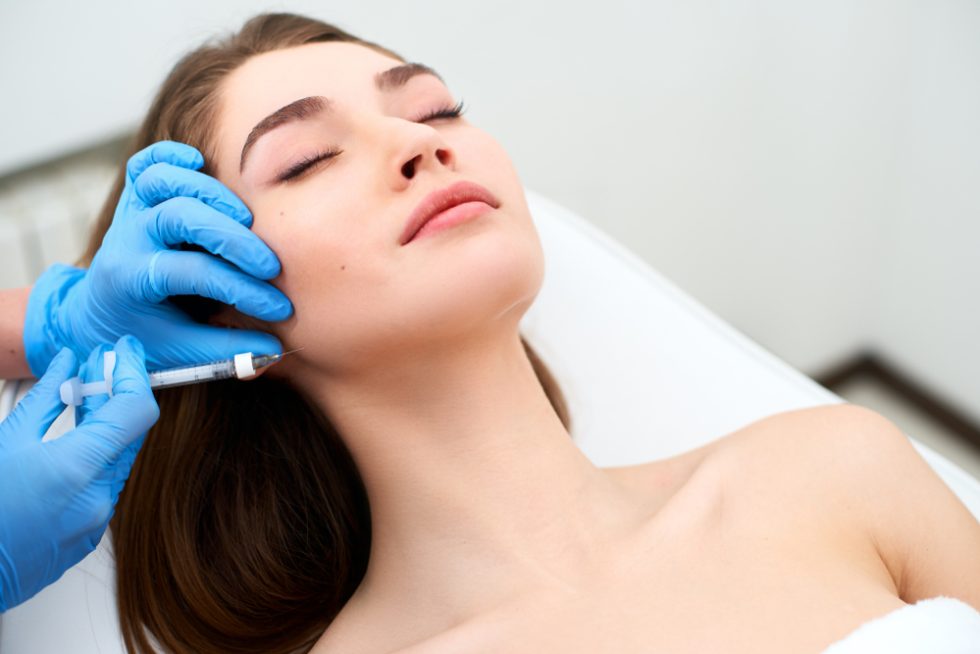
Dermal Fillers for Facial Support
Dermal fillers may improve the appearance of jowls when facial volume loss, weak chin projection or reduced jawline definition is contributing to the concern.
The filler is not necessarily injected directly into the jowl. Strategic placement may involve the cheeks, chin, jawline or pre-jowl area.
Fillers may help by:
- Restoring selected areas of cheek support.
- Improving chin projection.
- Supporting the pre-jowl area.
- Defining parts of the jawline.
- Softening shadows beside the chin.
- Improving overall facial balance.
Jawline filler may be appropriate when reduced definition is making mild jowls look more prominent. However, adding filler to an already heavy or substantially lax lower face may create additional width or fullness.
The result depends on subtle, anatomically appropriate placement. Too much filler can make the lower face look puffy, square or unnatural.
Eight-Point Non-Surgical Facelift
An eight-point non-surgical facelift uses filler across several areas of the face rather than treating the jowl in isolation.
The practitioner assesses how volume loss in the cheeks, mid-face, chin and jawline is influencing the lower face. Restoring support in carefully selected areas may create a more balanced result than simply filling beside the mouth.
This remains a filler treatment. It cannot remove excess skin or produce the same tissue repositioning as a surgical facelift.
Dermal Filler Results
Some improvement is usually visible immediately, although swelling and bruising can temporarily affect the appearance.
The result is generally reviewed after approximately two weeks, once the filler and surrounding tissue have settled. Hyaluronic-acid filler results are temporary and gradually reduce as the product is broken down by the body.
Dermal Filler Risks
Common temporary effects include:
- Swelling.
- Bruising.
- Redness.
- Tenderness.
- Temporary unevenness.
Less common complications can include infection, persistent lumps, delayed inflammatory reactions and migration.
Accidental injection into a blood vessel is rare but potentially serious. It can result in skin damage, visual complications or stroke. Treatment should therefore be performed by a suitably qualified medical practitioner who understands facial anatomy and can recognise and manage complications.
Morpheus8 for Jowl Tightening
Morpheus8 combines microneedling with radiofrequency energy. Fine needles enter the skin and deliver controlled heat at selected depths.
This produces a wound-healing response intended to stimulate collagen remodelling and improve tissue firmness.
Morpheus8 may be considered when jowls are associated with:
- Mild or moderate skin laxity.
- Early lower-face softness.
- Crepey skin.
- Fine lines.
- Uneven texture.
- Reduced jawline firmness.
Morpheus8 is minimally invasive rather than non-invasive because needles penetrate the skin.
Morpheus8 Results
Results develop gradually because collagen remodelling takes time. Early changes may become visible within several weeks, with further improvement developing over the following months.
A course of treatments may be recommended according to the degree of laxity, the treatment settings and the patient’s response.
Morpheus8 Risks and Downtime
Temporary effects may include:
- Redness.
- Swelling.
- Tenderness.
- Pinpoint marks.
- Bruising.
- Temporary roughness or sensitivity.
Less common but potentially serious complications include burns, infection, pigmentation changes, scarring, track marks, unwanted fat loss, contour irregularities and nerve injury.
Careful selection of needle depth and radiofrequency energy is particularly important around the lower face, where unwanted fat loss may make hollowing or laxity appear worse.
FaceTite for More Noticeable Jowls
FaceTite is a minimally invasive radiofrequency-assisted procedure used to contract soft tissue and improve lower-face and neck contours.
A narrow probe is passed beneath the skin through a small entry point while an external electrode travels over the skin. Controlled radiofrequency energy is delivered between the two components.
Depending on the treatment plan, FaceTite may also be combined with the removal of localised fat.
FaceTite may be considered for:
- Moderate lower-face laxity.
- More visible jowls.
- A soft or undefined jawline.
- Fullness beside or beneath the chin.
- A combination of fat and loose tissue.
- Early or moderate neck laxity.
FaceTite is a deeper procedure than an injectable, skin booster or surface-based treatment. Local anaesthetic, small skin entry points and compression after treatment may be required.
FaceTite Recovery
Swelling, bruising, tenderness, firmness and temporary numbness may occur. Recovery varies according to the amount of treatment and whether fat removal is also performed.
A compression garment may be recommended to support the area while it heals.
FaceTite Risks
Potential complications include:
- Burns.
- Infection.
- Contour irregularity.
- Fluid collections.
- Scarring.
- Prolonged numbness.
- Nerve injury.
- Asymmetry.
FaceTite is not automatically the correct treatment because jowls are more noticeable. Suitability depends on the depth of tissue descent, skin quality, fat distribution and the result the patient expects.
Profhilo for Lower-Face Skin Quality
Profhilo is an injectable hyaluronic-acid treatment used primarily to improve hydration, elasticity and general skin quality.
It may be helpful when the skin around the lower face appears:
- Dry or dehydrated.
- Thin or crepey.
- Dull.
- Finely lined.
- Mildly lax.
Profhilo is not a volumising filler and does not physically lift a descended jowl. It should not be presented as a replacement for cheek support, tissue tightening or surgery.
It can be used as a standalone treatment when skin quality is the principal concern. It may also form part of a wider plan alongside a separate treatment addressing volume or laxity.
Profhilo Results and Recovery
An initial course commonly consists of two treatments approximately four weeks apart.
Small raised bumps may be visible at the injection sites immediately afterwards. These usually flatten as the product disperses, often within 24 to 48 hours.
Improvements in hydration and texture develop gradually over the following weeks.
UltraClear Laser Coring
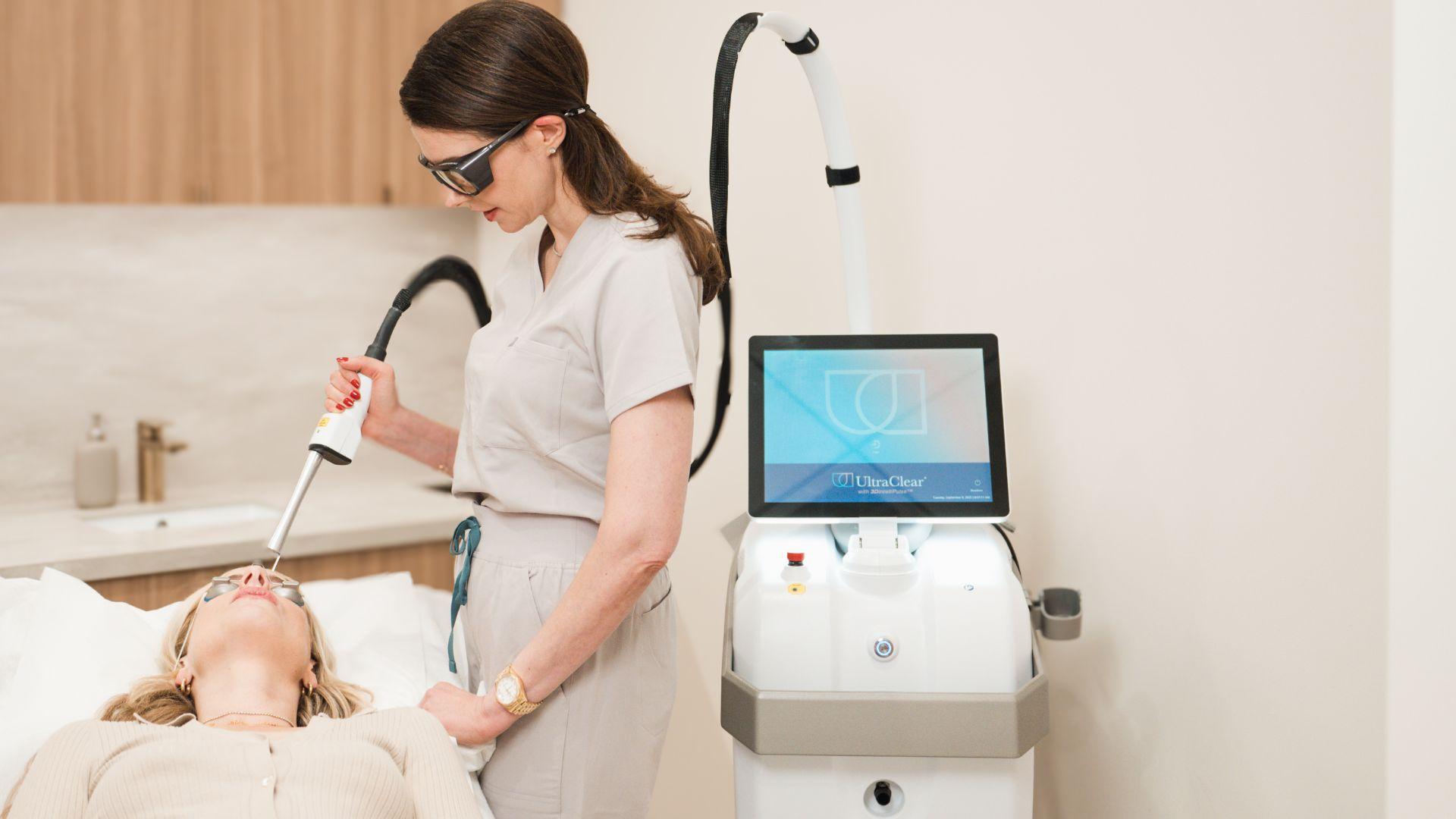
UltraClear laser treatment can be delivered at different depths and intensities to address concerns including skin texture, fine lines, pigmentation, scarring and selected degrees of laxity.
Laser Coring is a more intensive UltraClear mode. It creates controlled microscopic channels within the skin to stimulate repair and collagen remodelling.
It may be considered when jowls are accompanied by:
- Crepey lower-face skin.
- Fine lines around the mouth and jaw.
- Mild or moderate skin laxity.
- Uneven texture.
- Acne scarring.
- Sun-related skin changes.
Laser Coring focuses on skin remodelling. It does not replace lost cheek volume, remove substantial facial fat or reposition advanced tissue descent.
Laser Coring Recovery and Risks
Downtime depends on the intensity and depth selected. Temporary effects may include:
- Redness.
- Swelling.
- Sensitivity.
- Peeling or crusting.
- Temporary darkening or lightening of the skin.
More intensive treatment carries risks including burns, infection, prolonged redness, pigmentation changes and scarring.
Careful aftercare and strict protection from excessive sun exposure are important during healing.
Fat-Dissolving Treatment
Fat-dissolving injections may be considered when a clearly defined pocket of localised fat is contributing to fullness beside the chin or beneath the jaw.
They do not tighten loose skin or reposition descended facial tissue. Removing volume from an area that is already lax can sometimes make sagging more noticeable.
Fat-dissolving treatment may be appropriate when:
- There is a soft and localised pocket of fat.
- The skin retains sufficient elasticity.
- The patient is close to a stable weight.
- The fullness is caused by fat rather than tissue descent.
The anatomy around the jaw contains important nerves and blood vessels. Product choice, placement and practitioner experience are therefore important.
Possible Side Effects
Potential effects include:
- Swelling.
- Bruising.
- Pain or burning.
- Numbness.
- Firmness or temporary lumps.
- Uneven fat reduction.
- Infection.
- Skin injury.
- Nerve injury.
Facelift Surgery
A facelift or lower facelift may be the most appropriate treatment when jowls are caused by significant tissue descent, advanced skin laxity or substantial excess skin.
Unlike treatments that mainly improve skin quality or add temporary volume, surgery can lift and reposition deeper facial tissues and remove excess skin.
Depending on the patient’s anatomy, surgery may:
- Reposition descended lower-face tissue.
- Improve jowls and marionette areas.
- Restore a smoother jawline.
- Remove excess skin.
- Be combined with a neck lift.
Surgery involves incisions, scars, anaesthesia and a longer recovery. Risks can include bleeding, infection, wound-healing problems, asymmetry, nerve injury and anaesthetic complications.
However, repeated non-surgical treatment should not be recommended when surgery is more likely to achieve the patient’s desired result.
How to Choose the Right Jowl Treatment
The best treatment depends on which facial layer is causing the concern.
| Main cause | Treatments that may be considered | Important limitation |
|---|---|---|
| Cheek or facial volume loss | Cheek filler or a wider filler-based support plan | Filler cannot remove substantial excess skin |
| Weak chin or jawline structure | Chin filler, jawline filler or profile balancing | Improves proportions but does not reposition a true jowl |
| Mild skin laxity | Morpheus8, UltraClear or another collagen-remodelling treatment | Results are gradual and normally moderate |
| Poor skin quality | Profhilo, selected laser treatment or RF microneedling | Skin-quality treatments do not create a significant lift |
| Localised fat | Fat reduction or a contouring procedure | Removing fat may make loose skin more apparent |
| Fat and moderate laxity | FaceTite or a carefully staged combination plan | Requires more recovery and detailed assessment |
| Advanced tissue descent | Lower facelift or facelift with neck lift | Requires surgery, scars and a longer recovery |
When Volume Loss Is the Main Issue
Filler may restore support through the cheeks, chin or jawline. The goal should be to improve facial balance rather than inject large amounts of product directly around the jowl.
When Loose Skin Is the Main Issue
RF microneedling, Laser Coring or FaceTite may be considered according to the severity of the laxity and the treatment depth required.
Mild laxity may respond to collagen-remodelling procedures, while more advanced looseness may require a deeper treatment or surgery.
When Fat Is the Main Issue
Fat reduction may be appropriate when a specific pocket of fat is confirmed. The practitioner should assess whether the skin is likely to contract after the volume is reduced.
When Skin Quality Is the Main Issue
Profhilo, UltraClear or Morpheus8 may improve hydration, texture, fine lines or firmness. These treatments should not be expected to correct significant structural descent.
When Several Problems Are Present
Many patients have a combination of cheek volume loss, skin laxity, poor texture and lower-face fullness.
A staged plan may therefore be appropriate. For example:
- Filler may restore selected areas of support.
- Morpheus8 or UltraClear may improve skin firmness and texture.
- Profhilo may address hydration and crepiness.
- FaceTite may address deeper laxity and localised fullness.
Combining treatments does not automatically create a better result. Each procedure should have a clear purpose, and sufficient healing time may be needed between treatments.
Can Facial Exercises Get Rid of Jowls?
Facial exercises may strengthen or activate selected muscles, but they cannot restore lost facial fat, tighten substantial excess skin or reposition descended tissue.
There is limited evidence that face yoga or jaw exercises can produce a meaningful and predictable correction of jowls.
Repeated exaggerated movements may also make expression lines around the mouth more noticeable.
Can Weight Loss Get Rid of Jowls?
Weight loss may reduce lower-face fullness when excess body fat is contributing to the concern. However, it cannot selectively remove fat from the jowl area.
Significant weight loss may sometimes make jowls more visible by reducing facial volume and leaving the skin with less support.
Weight-management decisions should be based on general health rather than an attempt to target one facial area.
Can Creams or Skincare Remove Jowls?
Skincare can improve hydration, texture and the appearance of fine lines. It cannot physically lift descended facial tissue or remove excess skin.
A supportive routine may include:
- Gentle cleansing.
- A suitable moisturiser.
- Broad-spectrum sunscreen.
- Retinoids or other appropriate active ingredients.
- Avoiding smoking.
Claims that a cream can provide the same result as filler, an energy-based procedure or facelift surgery should be treated cautiously.
What Results Can You Expect?
The expected result depends on the treatment and the severity of the jowls.
- Dermal fillers may improve selected areas of support and definition immediately, with the settled result assessed after swelling reduces.
- Morpheus8 may gradually improve mild or moderate skin firmness and texture.
- FaceTite may provide deeper tissue contraction and contour improvement for appropriately selected patients.
- Profhilo may improve hydration and crepey skin but will not lift a pronounced jowl.
- UltraClear Laser Coring may improve texture, fine lines and selected degrees of laxity.
- Fat reduction may reduce a suitable localised pocket but will not tighten substantial loose skin.
- Facelift surgery may provide the most significant improvement for advanced tissue descent and excess skin.
No treatment should be guaranteed to remove jowls completely or permanently stop the ageing process.

How Long Do Jowl-Treatment Results Last?
Longevity varies according to the procedure and the patient’s natural ageing pattern.
- Hyaluronic-acid fillers:
Results are temporary and gradually reduce as the product is broken down. - Profhilo:
Skin-quality improvements are temporary, and maintenance may eventually be considered. - Morpheus8 and laser treatments:
Collagen-related improvements may remain visible for months or longer, but ageing continues. - FaceTite:
Tissue-contraction results may be long-lasting but cannot prevent future ageing or weight-related changes. - Fat reduction:
Treated fat-cell reduction may be long-lasting, although remaining fat cells can enlarge following weight gain. - Facelift surgery:
Results can be long-lasting but are not permanent because the face continues to age.
How to Maintain Your Results
You may help preserve your results by:
- Maintaining a reasonably stable weight.
- Using broad-spectrum sunscreen regularly.
- Avoiding smoking.
- Following a consistent skincare routine.
- Following all treatment-specific aftercare instructions.
- Attending recommended review appointments.
- Allowing each treatment result to develop before arranging further procedures.
Maintenance should be based on reassessment rather than an automatic timetable.
Why a Consultation Is Important
Two people with similar-looking jowls may have very different underlying causes.
During a consultation, the practitioner should assess:
- Skin thickness and elasticity.
- Cheek and temple volume.
- Chin projection.
- Jawline structure.
- The amount and position of facial fat.
- The severity of tissue descent.
- Neck laxity.
- Facial movement and asymmetry.
- Previous aesthetic procedures.
- Medical conditions and medication.
- Your expectations and preferred recovery time.
The practitioner should explain which layer of the face is causing the concern and how the recommended treatment is intended to address it.
Questions to Ask Before Jowl Treatment
Before proceeding, consider asking:
- What is the main cause of my jowls?
- Will this treatment restore volume, tighten skin or reduce fat?
- What degree of improvement is realistic?
- Could filler make my lower face look heavier?
- Could fat reduction make loose skin more noticeable?
- How many treatments may be required?
- When will the final result be visible?
- What downtime should I expect?
- What are the common and serious risks?
- Would a combination plan be helpful or unnecessary?
- Would surgery provide a more appropriate result?
- What support is available if a complication occurs?
Final Thoughts
Jowls usually develop because of a combination of facial volume loss, skin laxity, changes in fat distribution and reduced structural support.
Mild jowls may improve with carefully placed filler, collagen-remodelling treatment or improvements in skin quality. More noticeable jowls may require a deeper procedure such as FaceTite or a carefully planned combination approach.
Profhilo may improve hydration and crepey skin, but it cannot lift substantial tissue descent. Fat-reduction treatment is only appropriate when a genuine localised fat pocket is contributing to the concern.
Advanced jowls and significant excess skin are generally treated most predictably with facelift or lower-facelift surgery.
The best place to start is a detailed assessment that establishes whether your jowls are caused primarily by volume loss, loose skin, fat, facial structure or deeper tissue descent.
This article is provided for general educational purposes and is not a substitute for personalised medical advice. Treatment suitability, results, recovery, risks and longevity vary between patients.


