


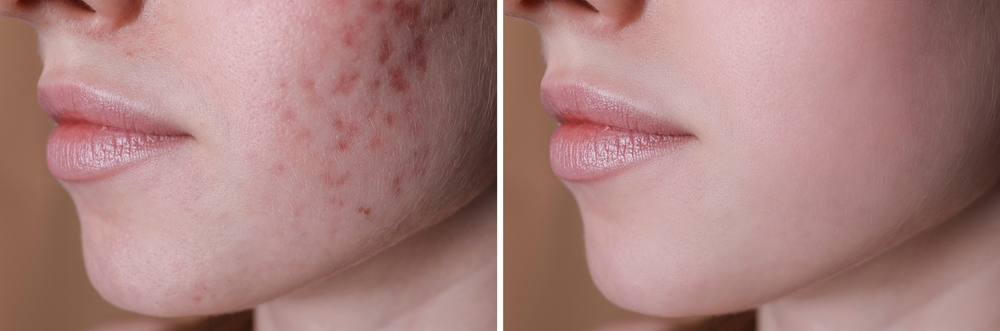
You finally figured out the root cause of your acne and got it under control. But now you have a new problem. Even though the acne has cleared and you no longer have breakouts, the acne scars seem to be holding you back.
Acne scars have various characteristics, including uneven texture, small depressions, darker marks, redness or deeper indentations that do not improve with ordinary skincare alone. You can learn more about the different ways to get rid of spot scars.
The good news is that acne scars can often be improved with the right non-surgical treatment plan, so you do not have to worry about significant downtime while still achieving noticeable results.
Understanding the Different Types of Acne Scars
Just as there are different types of acne, there are also different types of acne scars. Understanding them can help you make an informed decision about the most suitable treatment.
Atrophic Acne Scars
Atrophic scars are the most common type of acne scarring. They appear as dips, pits or shallow depressions in the skin, usually because the skin has not produced enough collagen during the healing process following inflammation.
Atrophic acne scars can make the skin look uneven, especially under bright lighting or from certain angles. They are often treated with collagen-stimulating procedures such as medical microneedling, laser resurfacing or carefully selected skin-resurfacing treatments.
Ice Pick Scars
Ice pick scars are narrow, deep scars that look like tiny punctures in the skin. They can be more difficult to treat because they extend deeper into the skin and commonly occur on the cheeks, where acne inflammation has damaged the deeper layers.
Because of their depth, ice pick scars often require targeted treatment to achieve noticeable results.
Boxcar Scars
Boxcar scars are wider depressions with more defined edges. They can look like small craters or square-shaped indentations in the skin and are often caused by inflammatory acne that has damaged collagen in a specific area.
These scars may respond well to treatments that resurface the skin and encourage collagen renewal. However, depending on their depth, a combination of microneedling, laser resurfacing, chemical peels or dermal fillers may be recommended.
Rolling Scars
Rolling scars create a wave-like or uneven appearance across the skin. They are usually caused by bands of scar tissue pulling the skin down from beneath, creating a soft, undulating texture.

Non-Surgical Treatments for Getting Rid of Acne Scars
Now that you understand the different types of acne scars, the next step is to learn about the non-surgical treatments you may wish to consider.
Laser Resurfacing
Laser resurfacing is a popular non-surgical treatment for acne scars because it can improve skin texture and tone while stimulating collagen production. The new collagen helps rebuild the skin’s structure and creates a smoother, more refined appearance.
UltraClear laser treatment may be considered for suitable patients who want to improve acne scarring, uneven texture and overall skin quality.
Dermal Fillers
Dermal fillers can be used to improve certain types of indented acne scars, particularly deeper atrophic or rolling scars. These scars can make the skin look uneven because the tissue beneath the surface has lost volume or support.
Carefully placed dermal filler can lift depressed areas, making the skin appear smoother and more balanced. This approach does not remove the scar itself, but it can reduce the visible shadowing and unevenness that make the scarring stand out.
Microneedling
Microneedling is a collagen-stimulating treatment that uses tiny needles to create controlled micro-injuries in the skin. This encourages the skin to repair itself and produce fresh collagen and elastin over time.
Although the treatment involves small needles, it is designed to create controlled channels in the skin. You can learn more about what microneedling feels like and what to expect during treatment.
Chemical Peels
Chemical peels use carefully selected acids to exfoliate the skin and encourage cell renewal. They can help improve post-acne marks, uneven tone, rough texture, congestion and mild superficial scarring.
Different peels work at different depths. A lighter peel may refresh the skin and brighten post-inflammatory pigmentation, while a stronger peel may target more noticeable texture concerns. The right peel depends on your skin type, sensitivity, scar pattern and treatment goals.
Combining Treatments for Better Results
Most practitioners will take a combined treatment approach to improve results, especially if you have a mixture of rolling scars, boxcar scars, pigmentation, enlarged pores and uneven texture. This means your skin may benefit from a combination of treatments.
For example, microneedling can stimulate collagen, while chemical peels can improve pigmentation and surface clarity. Dermal fillers may be used for selected deeper depressions, while laser resurfacing may help refine texture and tone.
A combined plan can be more effective because it targets different layers of the skin. Acne scarring often affects the surface, the deeper dermis and the underlying support structure, so a layered treatment approach may be appropriate.
Your practitioner will guide you on which treatment to have first, how much time to leave between treatments and how to care for your skin between appointments. This is important because treating scars too aggressively can irritate the skin and slow your progress.
Book an Acne Scar Consultation at Amedics
Acne scars can affect how you feel about your skin, but you do not have to keep guessing what might work. With the right assessment and carefully selected treatment plan, your skin can begin to look smoother, clearer and more even over time.
If you want to know how to get rid of acne scars, the best place to start is with a detailed skin consultation. Your skin needs to be properly assessed so that the right treatment or combination of treatments can be recommended based on your scar type, skin tone and goals.
You can learn more about what happens during a skin consultation before arranging your appointment.
At Amedics, we offer a professional and personalised approach to acne scar treatment. Whether you are interested in laser resurfacing, dermal fillers, microneedling, chemical peels or a combined plan, we can help you understand your options and move forward with confidence.


